|
❬
|
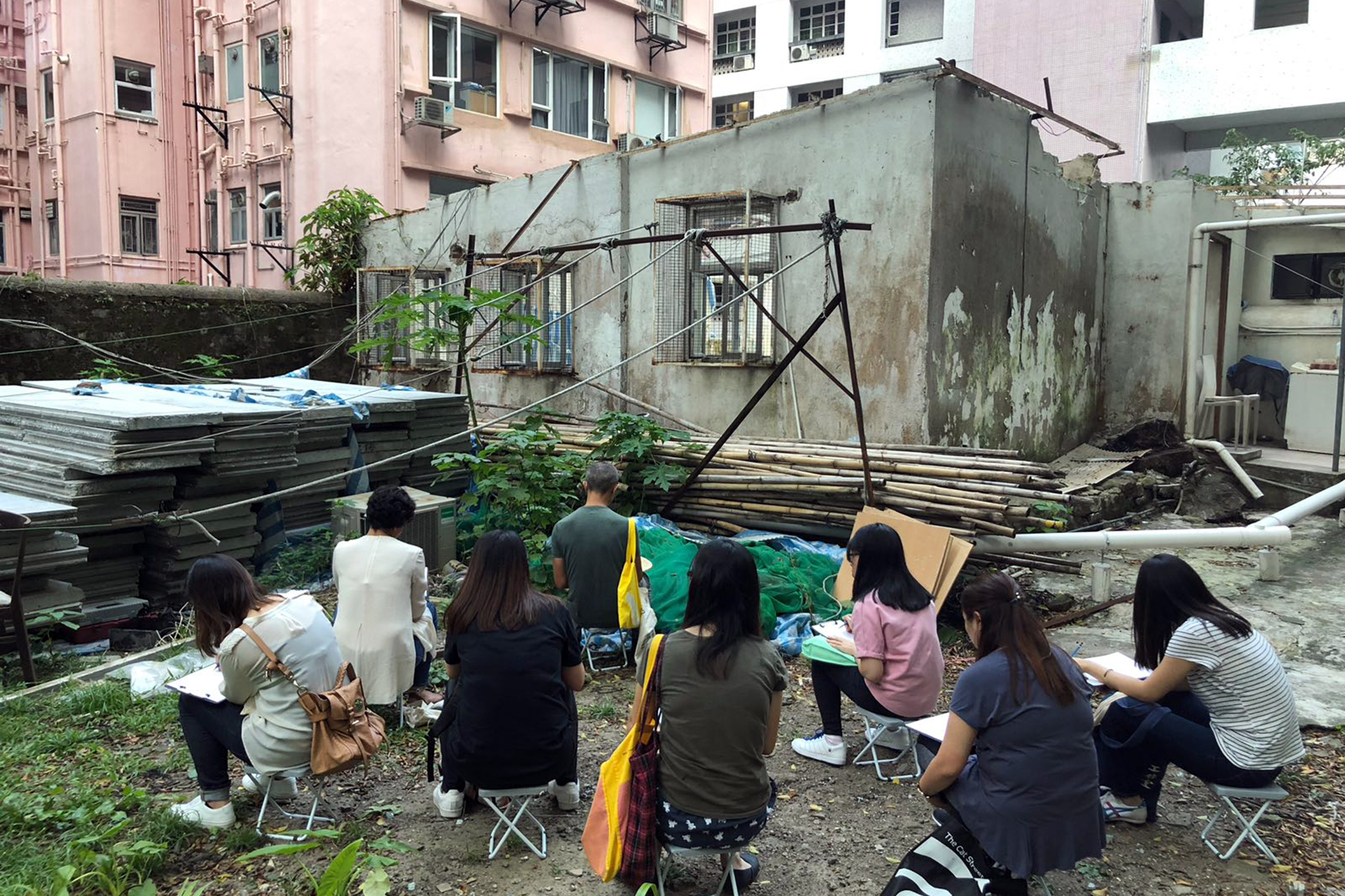
Zheng Bo leads a walk with AAA team in Sheung Wan and Central, observing and drawing weeds between the cracks. This silent and collective exercise asks how one can slow down in an urban centre, learn from plants, and imagine non-anthropocentric worlds.
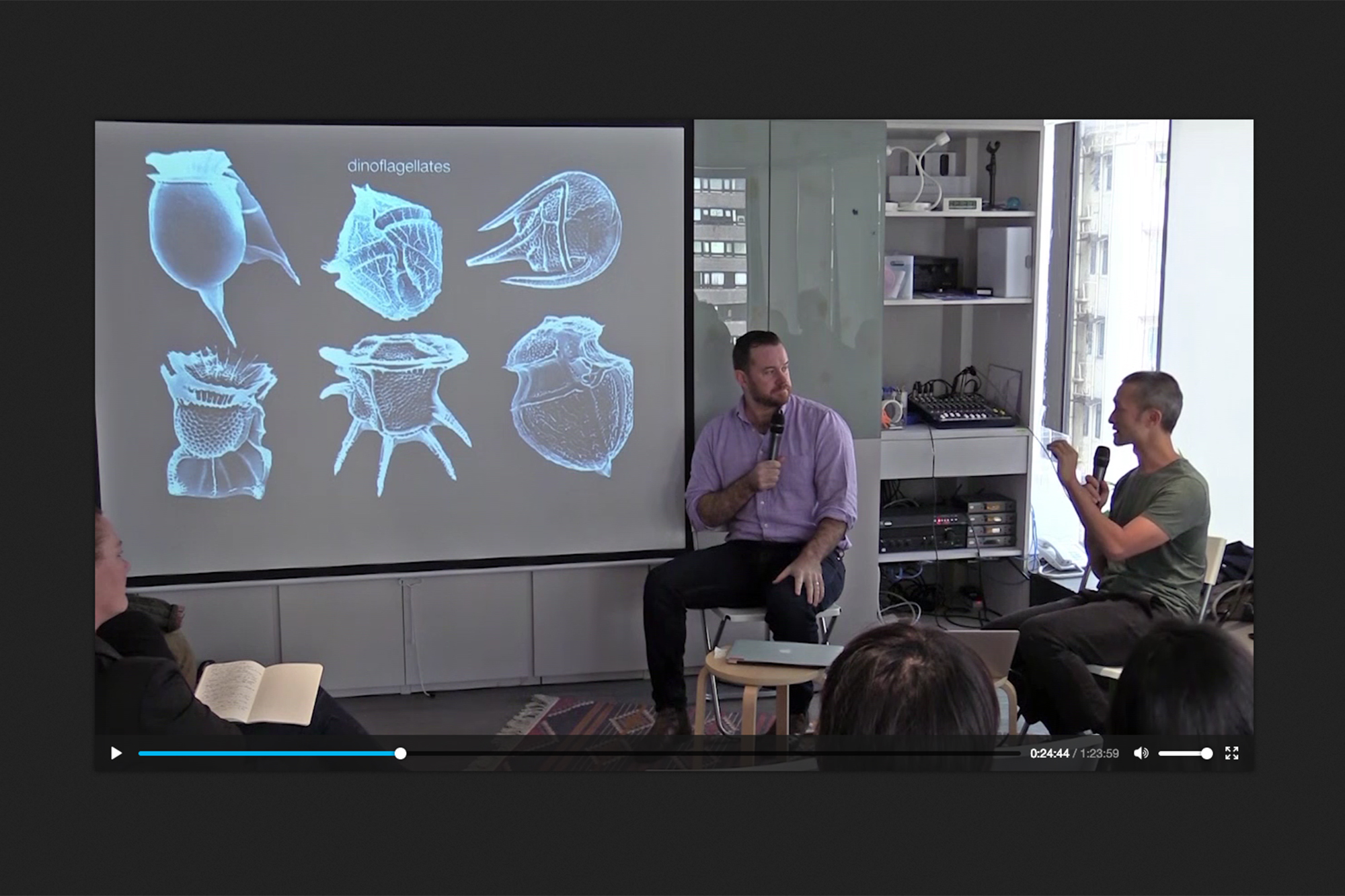
Zheng holds a conversation with David Baker, a marine biologist at the University of Hong Kong. Baker’s research focuses on ecology, conservation, and biodiversity. Baker and Zheng explore how non-human beings practice knowledge. Watch the video on AAA website.
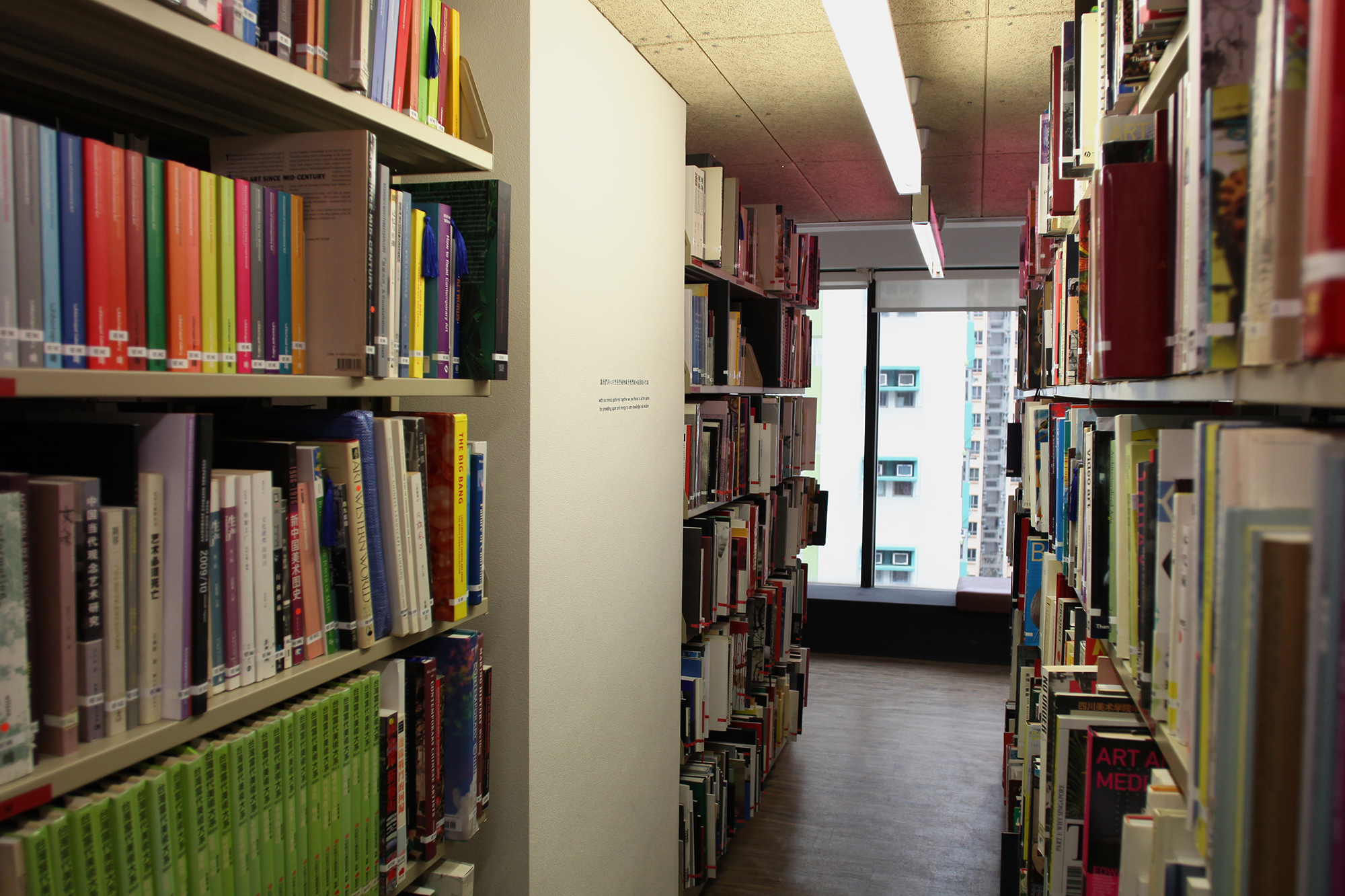
A statement of thanksgiving is added in the library.
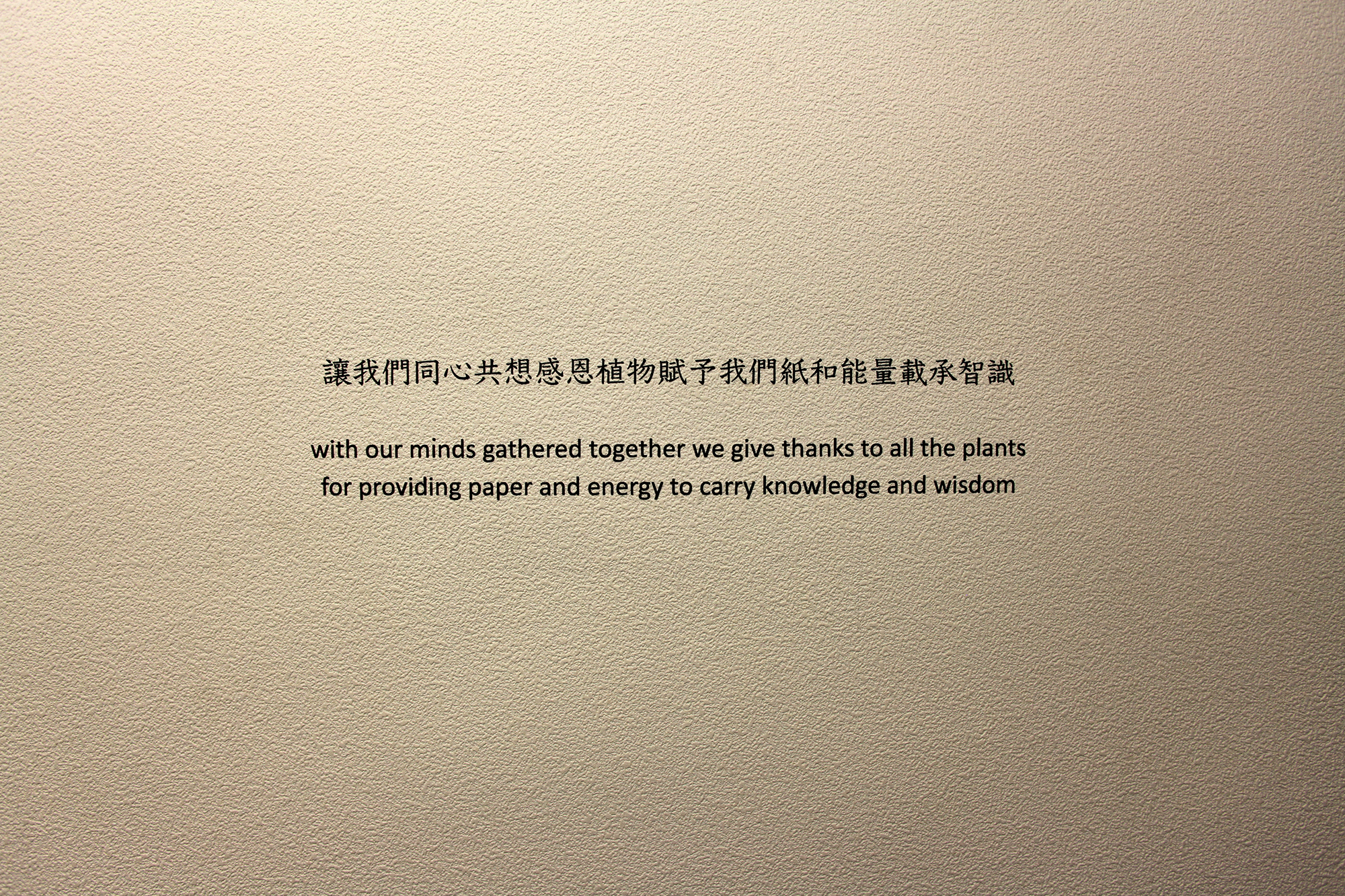
A statement of thanksgiving is added in the library.

A small “monkey puzzle” tree (Araucaria araucana), given to Zheng Bo in Paris in 2016 by a young artist from South America, is placed next to a computer.
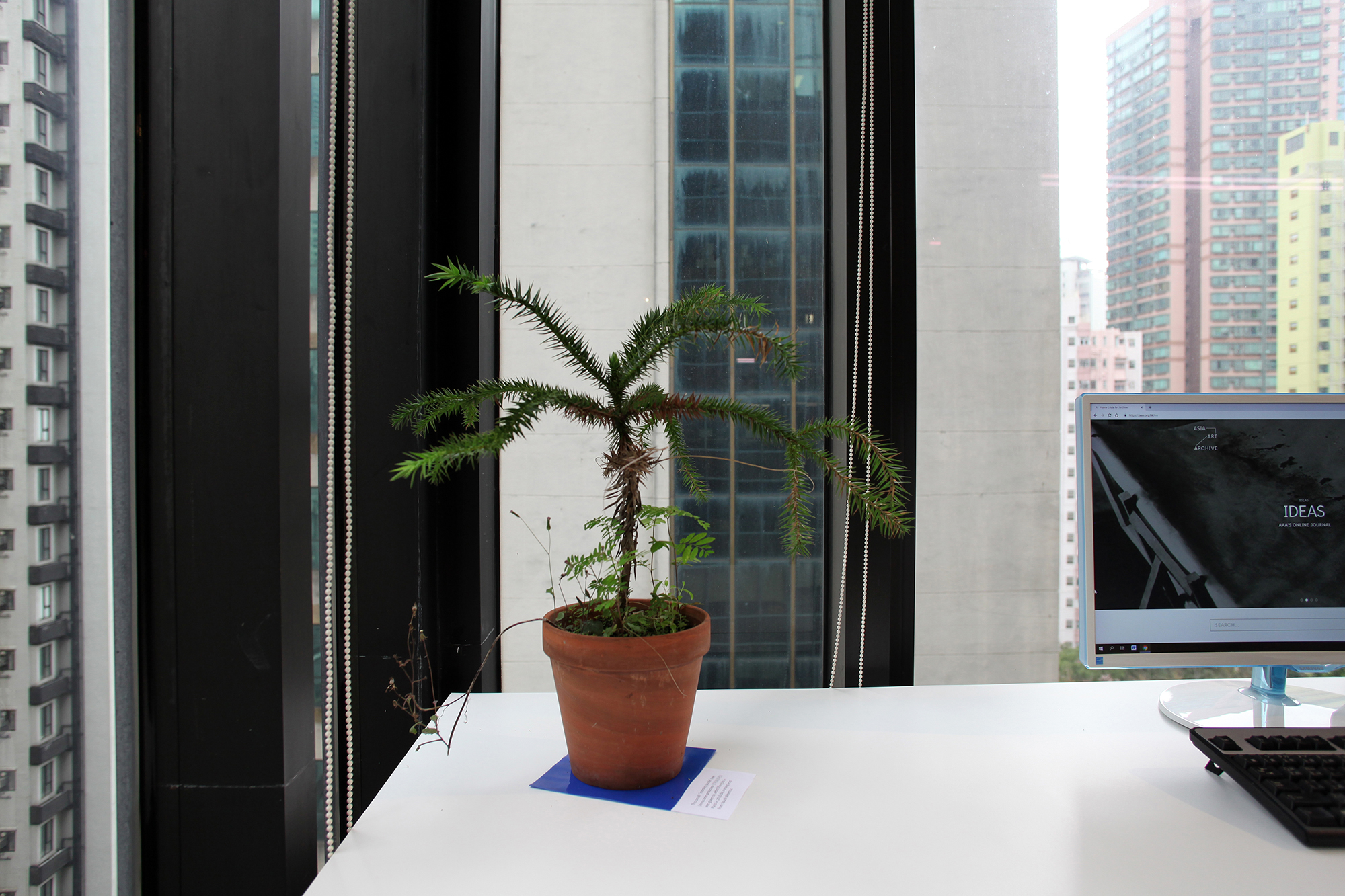
A small “monkey puzzle” tree (Araucaria araucana), given to Zheng Bo in Paris in 2016 by a young artist from South America, is placed next to a computer.
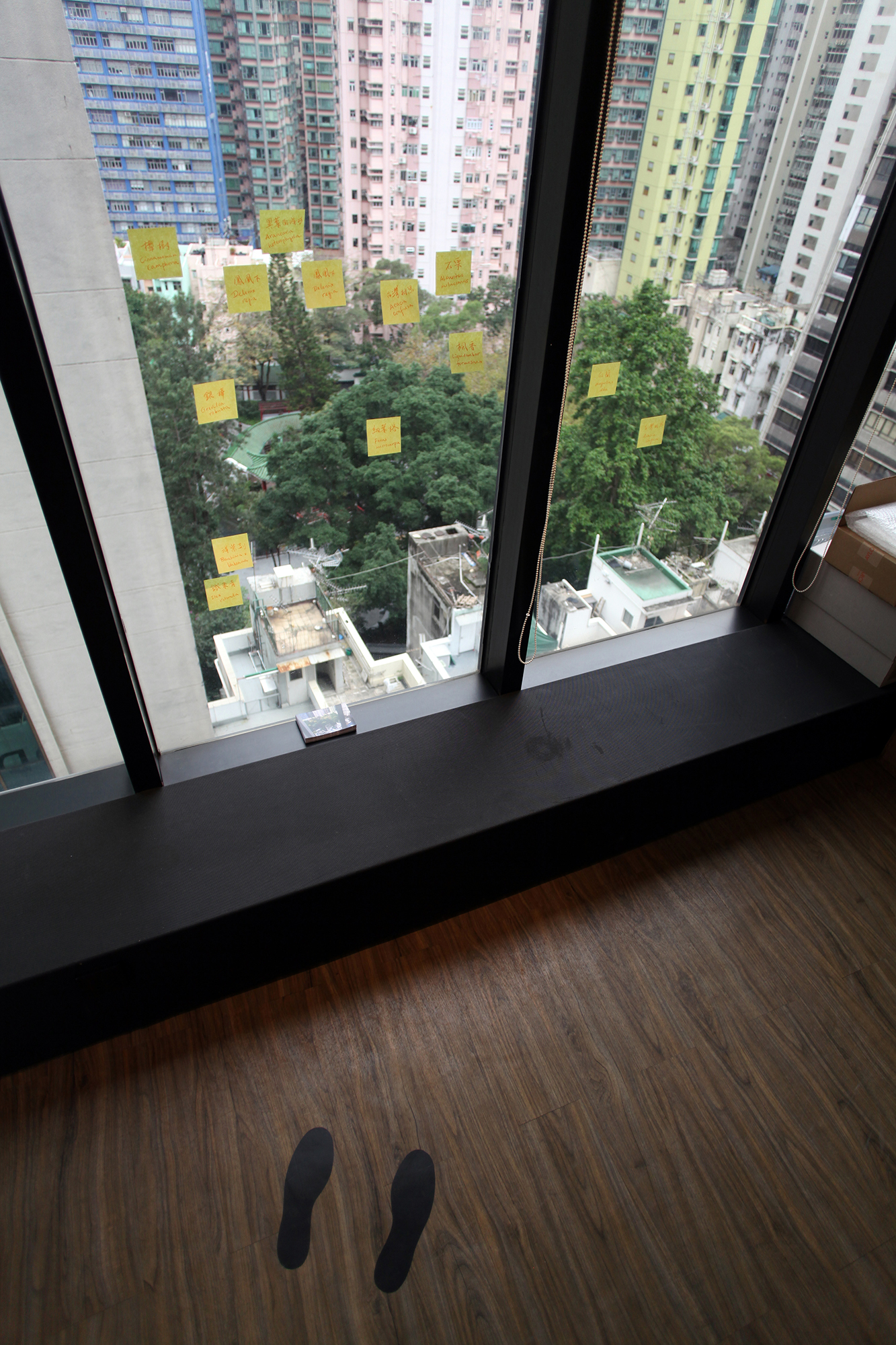
Library visitors are invited to take a break and look out to Hollywood Road Park. Trees visible have been identified.
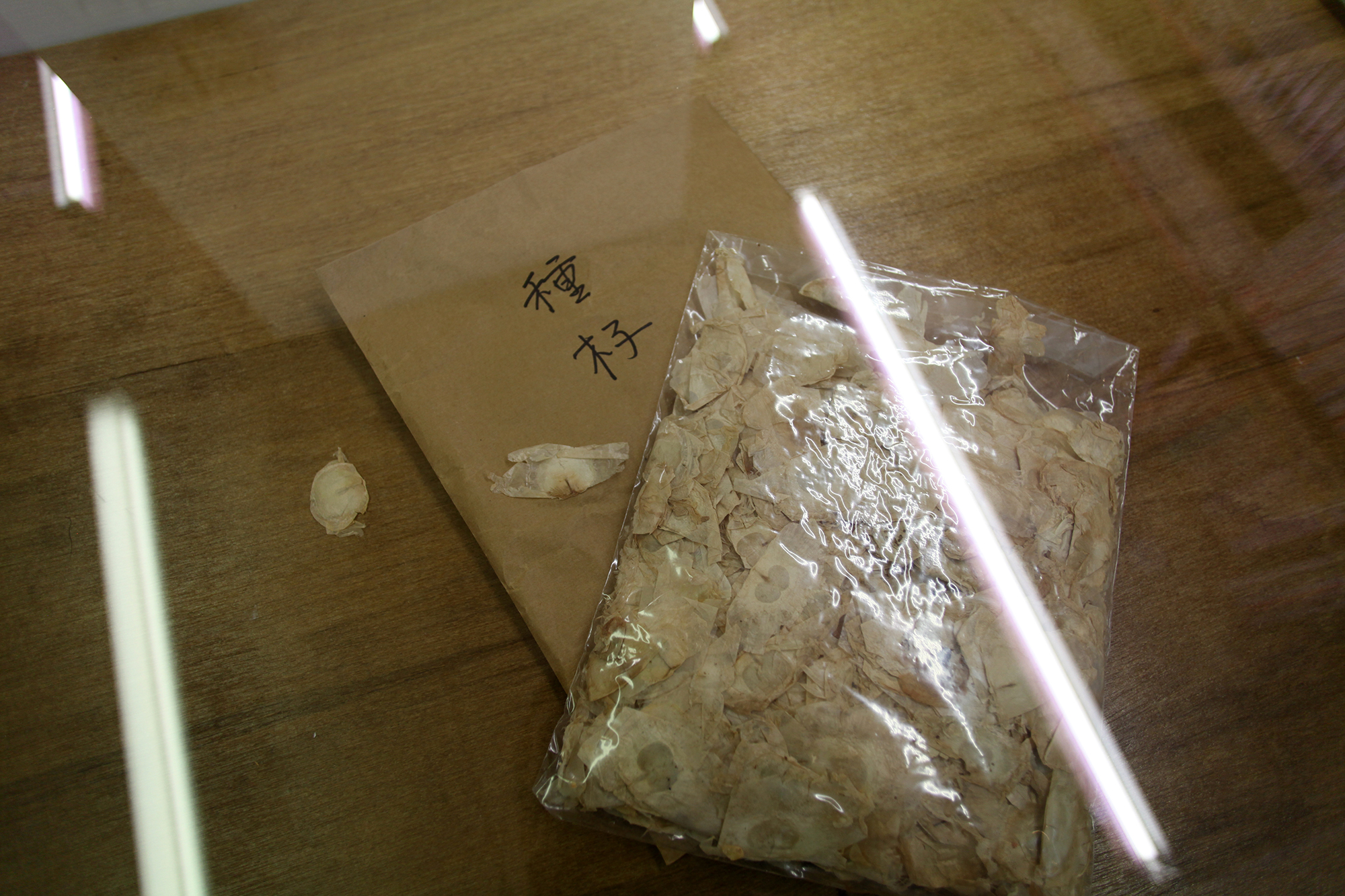
A display of winged seeds of Oroxylum indicum (木蝴蝶) from the Ha Bik Chuen Archive. The late artist used these seeds as signatures in his books.
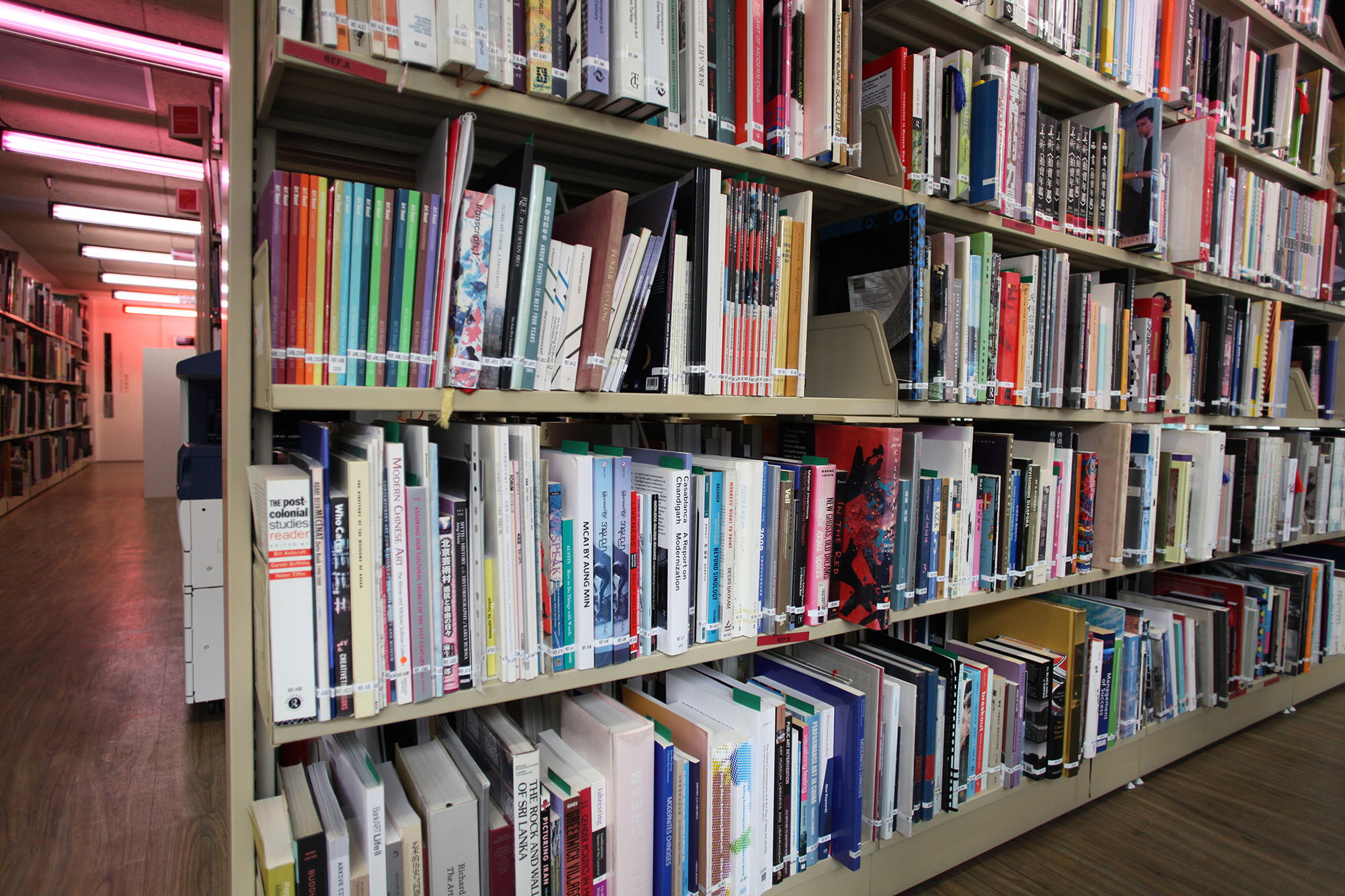
Green cards are inserted into books to mark pages with pictures of plants.
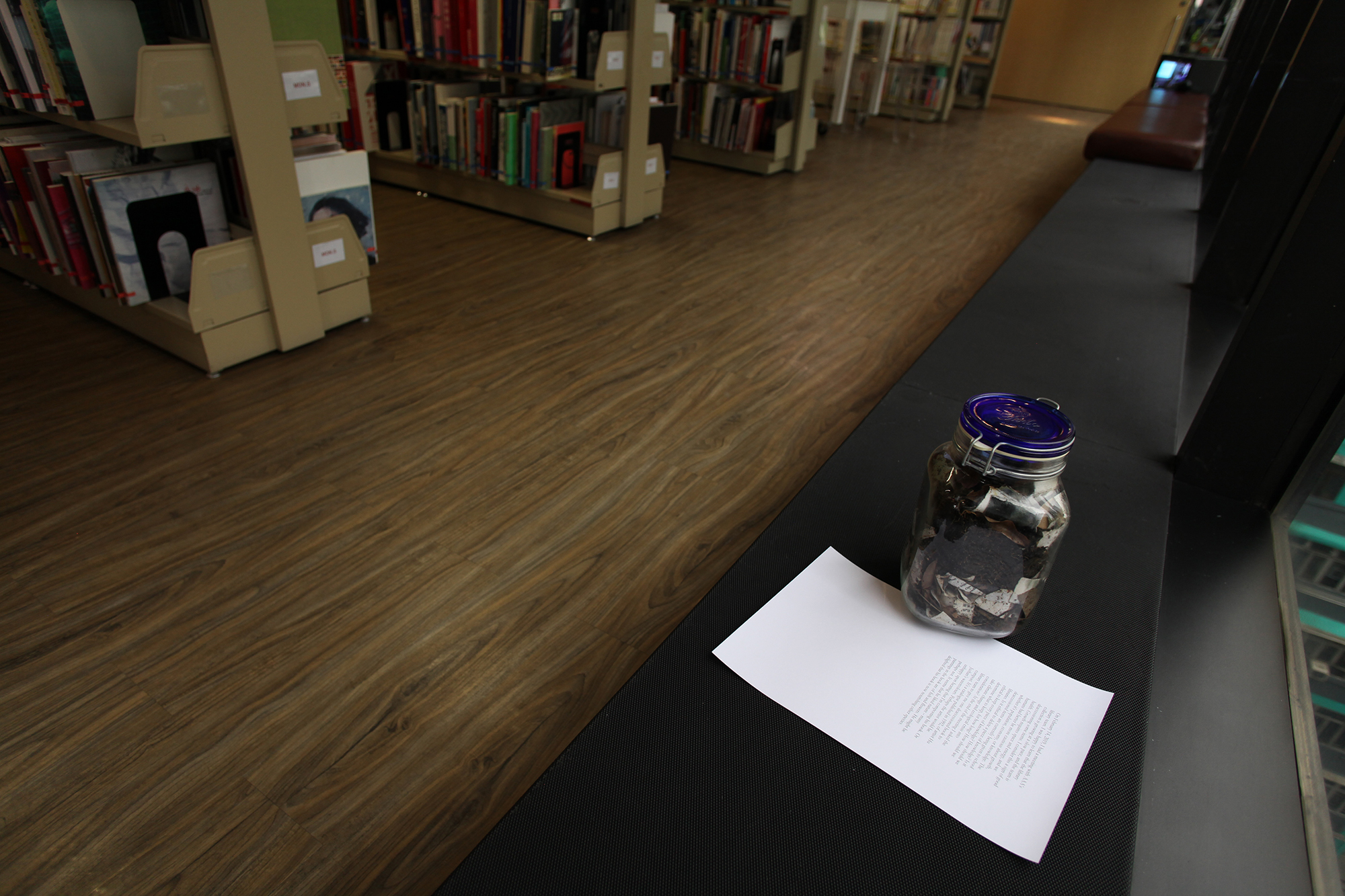
A book deaccessioned from the library is composted. Accompanying text by Zheng: “On February 14, 2019, I had a meeting with AAA’s library team. I was happy to learn that the library collection is growing at a slow pace, and the team is deaccessioning some items. I consider this a sign of good health. Growth requires space and energy, and we humans had better be more cautious about growth, whether it’s population, economy, or knowledge. The deaccessioned items are currently being given to school libraries. Is it ethical to delete a piece of knowledge? Is it ethical to keep every piece of knowledge? How should we determine what to keep, for how long? How should we take climate change and ecological crisis into consideration? At the end of the meeting I asked the library team to give me one deaccessioned book to compost. It’s a catalogue published in 1992, of artist Hu Juzhan’s watercolours. Perhaps the artist would be unhappy upon hearing that I’m composting his book. Or perhaps not. It seems that he liked nature – many paintings in the book are of fish and flowers. He might be delighted that his book is now nourishing other species.”
|
❭
|